Blog
2D Class > Blog > Learning Skills > 如何善用科學化學習方法提高學習效能(How to Effectively Use Scientific Study Methods to Improve Learning Efficiency)
如何善用科學化學習方法提高學習效能(How to Effectively Use Scientific Study Methods to Improve Learning Efficiency)
- 2025 年 7 月 8 日
- Posted by: 2D Class
- Category: Learning Skills
No Comments
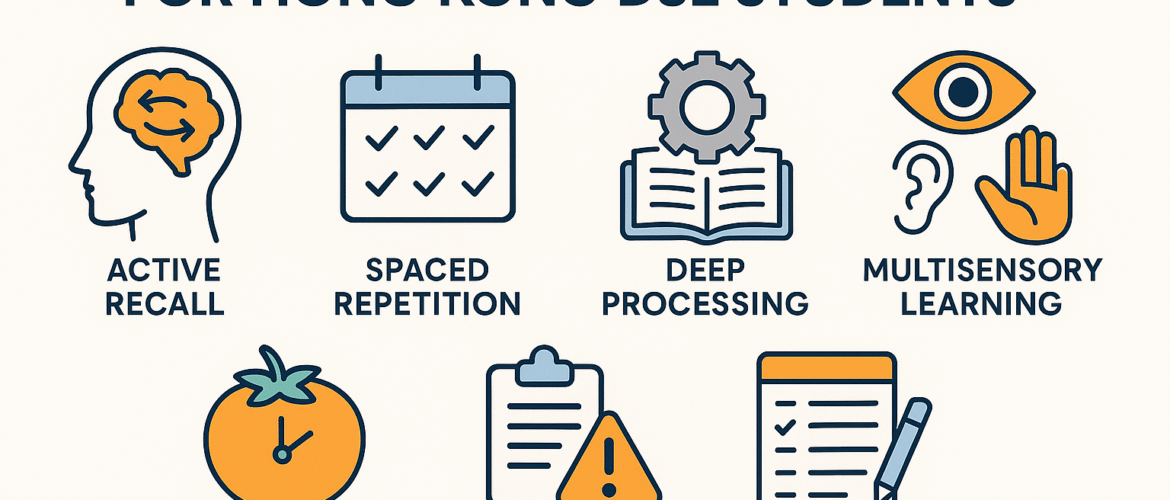
科學化學習方法強調以證據為本、系統化及高效率的學習方式,能有效提升理解力、記憶力和應試表現。以下是實踐建議:
1.
-
主動測驗自己而非單純重讀課本,例如合上書本後嘗試寫出重點或回答問題。
-
可利用自製問答卡(閃卡)、自我小測或向同學講解知識點。
-
Test yourself actively instead of simply rereading textbooks. For example, close your book and try to write down key points or answer questions from memory.
-
Use self-made flashcards, mini quizzes, or explain concepts to classmates to reinforce learning.
2.
-
將學習內容分多次、間隔一段時間重溫,而非短時間內重複溫習。
-
可用Anki、Quizlet等工具自動安排重溫時間,提升長期記憶。
-
Review study material multiple times with intervals in between, rather than cramming in a short period.
-
Tools like Anki and Quizlet can automatically schedule review sessions to strengthen long-term memory.
3.
-
不只背誦,而是理解和應用知識,例如將新知識與舊知識連結、用自己的話解釋內容。
-
嘗試舉例、畫圖或心智圖,幫助深化理解。
-
Go beyond rote memorization by understanding and applying knowledge. Connect new information with what you already know and explain concepts in your own words.
-
Try giving examples, drawing diagrams, or creating mind maps to deepen understanding.
4.
-
結合視覺、聽覺、動手操作等多種感官學習方式,例如看教學影片、聽錄音、畫圖表、做實驗。
-
多感官刺激有助於提升記憶及理解。
-
Combine visual, auditory, and hands-on learning methods, such as watching educational videos, listening to recordings, drawing charts, or conducting experiments.
-
Engaging multiple senses helps improve memory and comprehension.
5.
-
每次專注學習25分鐘,然後休息5分鐘,循環進行。
-
有助維持專注力及防止疲勞。
-
Focus on studying for 25 minutes at a time, followed by a 5-minute break, and repeat this cycle.
-
This helps maintain concentration and prevents fatigue.
6.
-
記錄做錯的題目及錯誤原因,定期回顧,避免重蹈覆轍。
-
每次溫習後簡單反思:哪些地方還不熟悉?下次如何改進?
-
Record questions you got wrong and the reasons for your mistakes. Review them regularly to avoid repeating the same errors.
-
After each study session, reflect briefly: What areas are still unclear? How can you improve next time?
7.
-
用項目符號、重點標示、心智圖、流程圖整理知識,便於理解和回顧。
-
視覺化工具有助於把複雜內容簡單化。
-
Organize knowledge using bullet points, highlights, mind maps, and flowcharts for easier understanding and review.
-
Visualization tools help simplify complex content.
Study Method Comparison Table
| 方法 | 主要作用 | 工具建議 |
|---|---|---|
| 主動回憶 | 強化記憶、檢視理解 | 閃卡、問答練習 |
| 間隔重溫 | 長期記憶、減少遺忘 | Anki、Quizlet |
| 深度加工 | 提升理解、靈活應用 | 心智圖、舉例說明 |
| 多感官學習 | 增強專注、多元記憶 | 影片、錄音、實驗 |
| 番茄工作法 | 提高專注力、減少拖延 | 番茄鐘App |
| 錯題本與反思 | 針對弱點、持續改進 | 筆記本、電子記錄 |
| 結構化筆記 | 梳理重點、便於回顧 | OneNote、Notion |
| Method | Main Purpose | Recommended Tools |
|---|---|---|
| Active Recall | Strengthen memory, check understanding | Flashcards, Q&A practice |
| Spaced Repetition | Long-term memory, reduce forgetting | Anki, Quizlet |
| Deep Processing | Enhance understanding, flexible application | Mind maps, examples |
| Multisensory Learning | Improve focus, diverse memory | Videos, recordings, experiments |
| Pomodoro Technique | Increase focus, reduce procrastination | Pomodoro timer apps |
| Error Log & Reflection | Target weaknesses, continuous improvement | Notebook, digital records |
| Structured Notes | Clarify key points, easy review | OneNote, Notion |
Tips
-
結合多種方法效果更佳,不要只依賴單一技巧。
-
定期檢討學習進度,靈活調整策略。
-
保持良好作息和心態,身心健康有助學習。
-
Combining multiple methods yields better results; don’t rely on just one technique.
-
Regularly review your learning progress and adjust your strategies flexibly.
-
Maintain a healthy routine and positive mindset—physical and mental well-being support better learning.
善用科學化學習方法,能讓你學得更快、更深、更牢固,為DSE及未來學習打下堅實基礎。
By making good use of scientific study methods, you can learn faster, deeper, and more effectively, building a solid foundation for the DSE and future studies.
 Google